Smart Drug Delivery: The Next Big Innovation in Pharma
Discover how smart drug delivery systems using AI, sensors, biotechnology and advanced materials could transform the future of medicines and pharma.
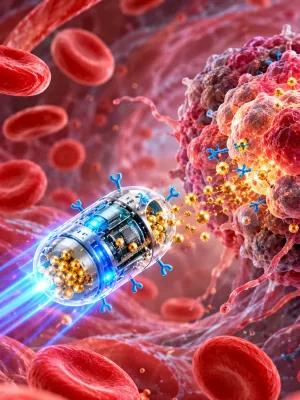
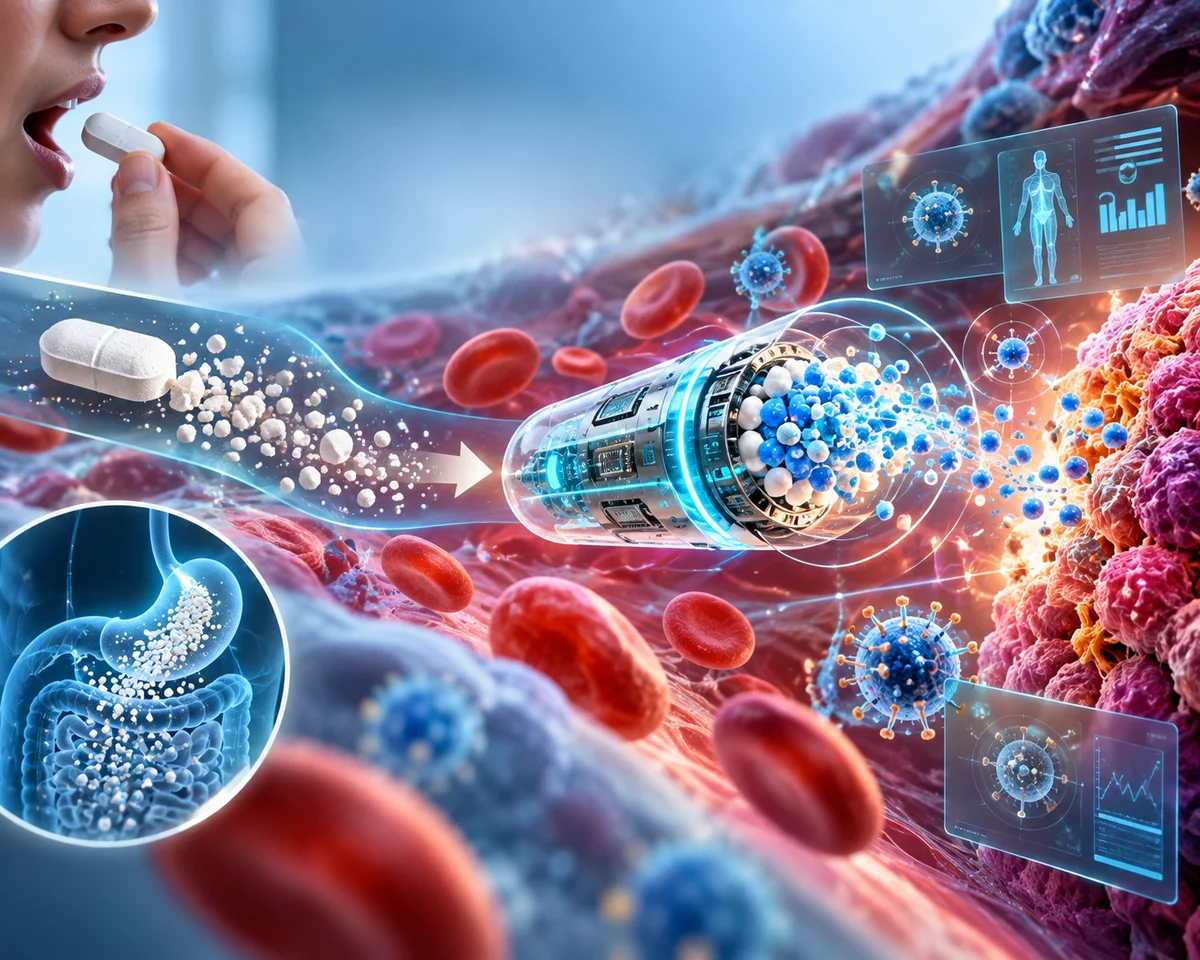
For decades, pharmaceutical innovation has largely focused on discovering new medicines. But an equally important question is often overlooked:
What if the medicine could be delivered exactly where it is needed, at the right time and in the right amount?
That is the idea behind a new generation of intelligent drug-delivery systems.
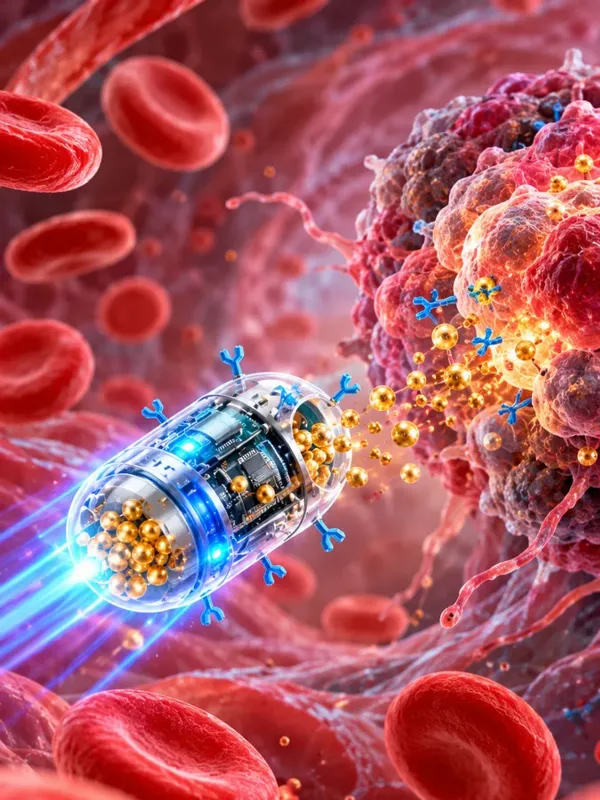
Researchers are combining pharmaceuticals with biotechnology, electronics, advanced materials, sensors and artificial intelligence to develop drug-delivery devices that can potentially provide more precise and controlled treatment.
A recent review published in Nature describes these intelligent and miniaturized drug-delivery devices as an emerging generation of systems designed to achieve more precise drug distribution, programmable release and potentially improved patient adherence.
This could eventually change not only how medicines are manufactured, but also how patients receive treatment.
What Is Smart Drug Delivery?
Traditional drug delivery is relatively simple.
A patient takes a tablet, receives an injection or applies a medicine to the skin. The active ingredient then travels through the body and is absorbed, distributed and metabolized.
But conventional delivery can have limitations.
A medicine may circulate throughout the body even when it is needed primarily in one particular tissue. The concentration may rise and fall between doses. Some medicines may cause unwanted effects because they reach tissues that do not need them.
Smart drug delivery attempts to make this process more controlled.
Instead of simply releasing a medicine, an advanced delivery system may be designed to:
Release a drug gradually
Deliver medicine at a specific location
Respond to physiological conditions
Adjust the timing of drug release
Monitor biological signals
Improve treatment adherence
Reduce unnecessary exposure to the medicine
The technology is still developing, but the concept is attracting significant scientific interest.
From Tablets to Intelligent Devices
The evolution of drug delivery can be viewed in stages.
First generation: Conventional medicines
Tablets, capsules, injections, creams and syrups remain the foundation of modern medicine.
Second generation: Controlled release
Extended-release tablets, implants, patches and other systems were developed to release medicines more gradually.
Third generation: Targeted delivery
Researchers began developing systems designed to transport drugs more selectively to particular tissues or cells.
Next generation: Intelligent delivery
The emerging approach combines sensing, programmable drug release, miniaturized devices, advanced materials and sometimes AI-enabled control.
The objective is not simply to deliver a drug, but potentially to make drug delivery more responsive to the patient's biological environment.
Where Could These Technologies Be Used?
The potential applications are broad.
Cancer Treatment
Cancer is one of the areas where precise drug delivery could be particularly valuable.
Cancer medicines can affect healthy cells as well as cancer cells. More targeted delivery could potentially increase the concentration of a therapeutic agent near the tumour while reducing exposure elsewhere.
Researchers are exploring multiple approaches, including nanoparticles, implantable systems and other targeted delivery technologies.
However, many of these approaches remain under research and should not be confused with routinely available treatments.
Diabetes
Diabetes requires long-term medication management, and adherence can be a major challenge.
Smart delivery technologies could potentially help provide controlled or responsive delivery of medicines and reduce the burden associated with repeated administration.
The concept is particularly interesting for medicines that need carefully controlled dosing.
Vaccination
Drug-delivery innovation could also influence vaccines.
Researchers are investigating technologies that could improve stability, administration, targeting and controlled release.
The long-term goal is to make some therapies easier to administer while improving their effectiveness and reliability.
Cardiovascular Diseases
Cardiovascular treatment often involves long-term medication.
Intelligent delivery systems could potentially help maintain appropriate drug exposure for extended periods and improve adherence.
For chronic diseases, even small improvements in how consistently a medicine is delivered can have significant implications.
What Role Does AI Play?
AI is becoming an important part of pharmaceutical innovation, but its role goes beyond discovering molecules.
Researchers are exploring AI for the design and optimization of drug-delivery systems.
AI can potentially help analyse large amounts of biological and engineering data to determine:
Which material may be appropriate
How quickly a drug should be released
How a delivery system might respond to biological signals
Which formulation may be more stable
How different delivery parameters interact
A 2026 Nature review highlights the integration of AI with intelligent drug-delivery devices as an important direction for the field.
This means the future pharmaceutical scientist may need to understand more than chemistry and pharmacology.
The intersection of pharmacy + biotechnology + engineering + data science is becoming increasingly important.
The Rise of Miniaturized Drug-Delivery Devices
One particularly interesting aspect of this innovation is miniaturization.
Researchers are working on increasingly small systems capable of performing sophisticated functions.
Some emerging concepts incorporate:
Sensors
Microelectronics
Drug reservoirs
Programmable release mechanisms
Biomaterials
Wireless communication
Data processing
The idea is to create systems that can operate inside or on the body while delivering medicines in a controlled manner.
In some designs, real-time biological information could eventually influence how and when a drug is released.
That represents a major conceptual shift:
The medicine is no longer simply administered. The delivery system itself becomes part of the therapeutic strategy.
Are These Technologies Ready for Everyday Pharmacy?
Not yet—not all of them.
This is an important distinction.
A technology appearing in scientific research does not mean that it is already available as a routine treatment.
Smart drug-delivery systems still face challenges involving:
Safety
Biocompatibility
Manufacturing
Reliability
Battery or power requirements
Long-term performance
Drug stability
Regulatory approval
Cost
Patient acceptance
Researchers also need to demonstrate that these systems provide meaningful clinical benefits compared with simpler and less expensive treatment options.
Moving from an impressive laboratory prototype to a safe, scalable pharmaceutical product can take years.
Why This Matters for Indian Pharma
India has traditionally been recognised for its strength in generic medicines and large-scale pharmaceutical manufacturing.
But the next phase of India's pharmaceutical growth could increasingly involve innovation.
In September 2026, the Government of India announced approval of approximately ₹1,600 crore in financial assistance for 41 pharma and medtech innovation projects under the first round of the Promotion of Research and Innovation in Pharma-MedTech Sector (PRIP) initiative. The projects cover areas including novel drug discovery, clinical development, complex generics, biosimilars and innovative medical devices.
This reflects a broader shift toward strengthening India's R&D and innovation ecosystem.
The opportunity is significant.
India already has pharmaceutical manufacturing capabilities, a large scientific workforce and an expanding biotechnology ecosystem.
The challenge is converting those advantages into more innovative, high-value pharmaceutical products and technologies.
What Does This Mean for Pharma Professionals?
The emergence of smart drug delivery could create new career opportunities at the intersection of different disciplines.
Future roles may increasingly involve:
Drug-delivery research
Pharmaceutical formulation
Nanotechnology
Biomaterials
Medical devices
Biotechnology
Computational modelling
AI in drug development
Regulatory affairs
Clinical research
Pharmaceutical engineering
For pharmacy students, this means that traditional pharmaceutical knowledge may increasingly need to be combined with technology and data skills.
A B.Pharm or M.Pharm graduate who understands formulation science, biomaterials and digital technologies could potentially find opportunities in areas that did not exist in their current form a decade ago.
From "What Drug?" to "How Should the Drug Be Delivered?"
Perhaps the most important change is philosophical.
Pharmaceutical innovation has traditionally asked:
What medicine should we develop?
The next generation of innovation is increasingly asking:
How can we deliver that medicine more precisely, safely and effectively?
That question could be just as important as discovering the medicine itself.
A highly effective drug may not achieve its full potential if it cannot reach the right tissue, at the right concentration, for the right duration.
Smart drug delivery attempts to solve precisely that problem.
The Future of Drug Delivery
The pharmaceutical industry is moving toward increasingly personalised and technology-driven treatment.
The future could involve medicines combined with:
Sensors + AI + biomaterials + biotechnology + miniature devices + advanced formulations.
The result may be treatments that are more targeted, more controlled and easier for patients to manage.
However, the industry must balance innovation with safety, affordability and evidence.
The most exciting technologies will ultimately have to answer one simple question:
Do they actually help patients more than existing treatments?
If the answer is yes, smart drug delivery could become one of the most important areas of pharmaceutical innovation in the coming years.
For India, it could also represent an opportunity to move beyond being known primarily as the “pharmacy of the world” and become a stronger player in the development of the technologies that define the next generation of medicines.
PharmaNation Takeaway
The future of pharma may not only be about discovering better medicines. It may be about making medicines smarter.
Intelligent drug-delivery systems are still an emerging field, but the convergence of pharmaceutical science, biotechnology, electronics, materials science and AI could fundamentally change how medicines are delivered in the future.
More from this section

The Practical Antibiotic Handbook by PharmaNation ( DOWNLOAD E-BOOK )
Drug Recall in India: What Happens When a Medicine Fails a Quality Test?
Drug Regulations in India: Rules, CDSCO, Schedules & Pharmacy Compliance