Drug Regulations in India: Rules, CDSCO, Schedules & Pharmacy Compliance
Understand drug regulations in India, including CDSCO, State Drug Controllers, Drugs & Cosmetics Act, Schedule H, H1, X, pharmacy licensing and 2026 regulatory changes.


When a patient buys a medicine from a pharmacy, the small strip of tablets in their hand has already passed through a complex regulatory system.
From manufacturing and testing to licensing, labelling, distribution, prescription requirements and post-marketing safety monitoring, medicines in India are governed by multiple rules and regulatory authorities.
For pharmacists, manufacturers, distributors and retailers, understanding these regulations is not optional. A regulatory mistake can lead to product seizure, licence action, penalties or even prosecution.
So, how exactly are medicines regulated in India?
The Main Law Governing Drugs
The foundation of India's drug-regulatory framework is the Drugs and Cosmetics Act, 1940, along with the Drugs Rules, 1945.
The framework covers important aspects of drugs and cosmetics, including their manufacture, import, sale and distribution. The Central Drugs Standard Control Organisation (CDSCO) is India's national regulatory authority and works under the Directorate General of Health Services, Ministry of Health & Family Welfare.
The regulatory system is not controlled by one authority alone.
There is an important division between central and state regulators.
CDSCO vs State Drug Authorities
One of the most common misunderstandings in the pharmaceutical sector is assuming that CDSCO regulates everything.
In reality, responsibilities are divided.
According to CDSCO, regulation of the manufacture, sale and distribution of drugs is primarily handled by State authorities, while central authorities are responsible for areas such as approval of new drugs and clinical trials, drug standards, control over imported drugs and coordination with State Drug Control Organisations.
In simple terms:
Central regulators → national-level regulatory functions
State regulators → much of the day-to-day licensing and enforcement of manufacturing, sale and distribution
State Drug Control Departments play a major role in licensing and enforcement at the state level.
This division is particularly important for pharmacies, wholesalers and manufacturers because the applicable State Drug Control authority is often their primary regulator.
What Is CDSCO Responsible For?
CDSCO has several important responsibilities.
These include:
Approval of certain new drugs
Regulation of clinical trials
Standards for drugs
Control of the quality of imported drugs
Coordination with State Drug Control Organisations
Certain specialised drug licences and approvals
Regulatory oversight of specified categories of critical products
CDSCO also handles the regulatory framework for drug imports. Imported drugs and manufacturing sites must meet applicable registration and licensing requirements, with applications handled through the SUGAM system in relevant cases.
CDSCO also plays an important role in areas such as vaccines, blood products and other specialised categories.
Understanding Drug Schedules
For pharmacists and retailers, drug schedules are particularly important.
Different schedules impose different requirements relating to the sale, labelling, storage, records or other regulatory conditions applicable to particular medicines.
Schedule H
Schedule H medicines are prescription drugs.
Their labels carry a warning that they are to be sold by retail only on the prescription of a Registered Medical Practitioner.
Schedule H1
Schedule H1 contains medicines subject to additional controls.
The rules prescribe specific labelling requirements, and retail sale without a prescription is prohibited. Additional record-keeping requirements also apply to Schedule H1 medicines.
This category is particularly important because it includes a number of antibiotics and other medicines where inappropriate use can create serious public-health problems.
Schedule X
Schedule X medicines have even more stringent controls, including specific prescription and record requirements.
For pharmacists, understanding these classifications is essential because “prescription medicine” is not one single regulatory category.
Why Antibiotics Receive Special Attention
Antimicrobial resistance is one of the major public-health challenges associated with inappropriate medicine use.
India's regulatory system therefore places additional controls on certain antimicrobial medicines.
This is one reason Schedule H1 and related requirements are important for pharmacies.
In September 2026, CDSCO also issued a circular highlighting concerns around indiscriminate use of painkillers and antibiotics and their association with chronic kidney disease.
The message for pharmacies is clear:
A medicine should not simply be treated as another product on the shelf.
Its regulatory status, prescription requirements and appropriate use matter.
Who Regulates a Pharmacy?
A retail or wholesale pharmacy operates within the regulatory framework enforced by the relevant State Drug Control authority.
Depending on the business, licences and applicable requirements may cover areas such as:
Retail sale
Wholesale sale
Storage
Premises
Qualified personnel
Purchase records
Sale records
Prescription medicines
Special categories of drugs
The requirements can vary depending on the type of licence and products being handled.
Therefore, a pharmacy should not assume that a licence for one activity automatically permits every other pharmaceutical activity.
Drug Manufacturing Is Even More Heavily Regulated
Before a pharmaceutical company can manufacture medicines for sale, it must comply with applicable licensing and regulatory requirements.
Manufacturers have responsibilities involving:
Manufacturing premises
Qualified technical staff
Quality systems
Raw materials
Production procedures
Testing
Documentation
Labelling
Stability
Storage
Product release
Quality systems such as Good Manufacturing Practices (GMP) are fundamental to pharmaceutical manufacturing.
The objective is straightforward:
Every batch of medicine should consistently meet the required quality standards.
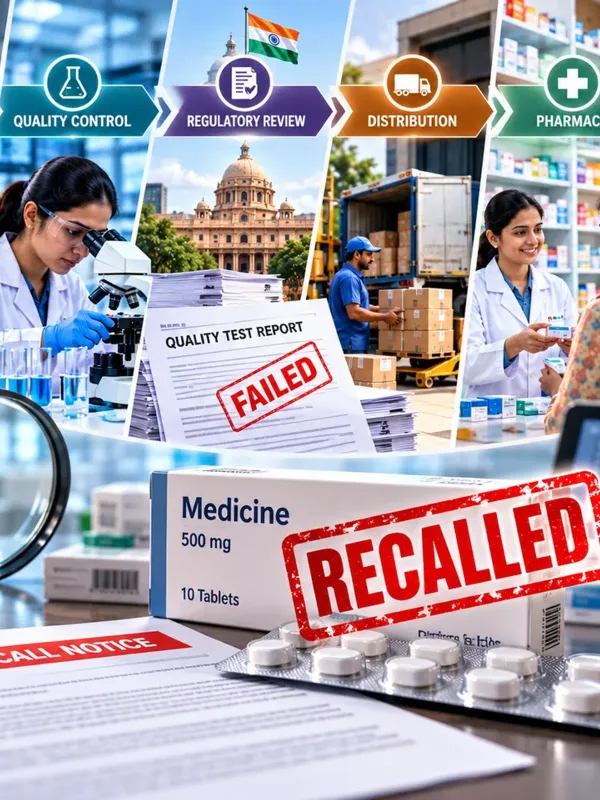
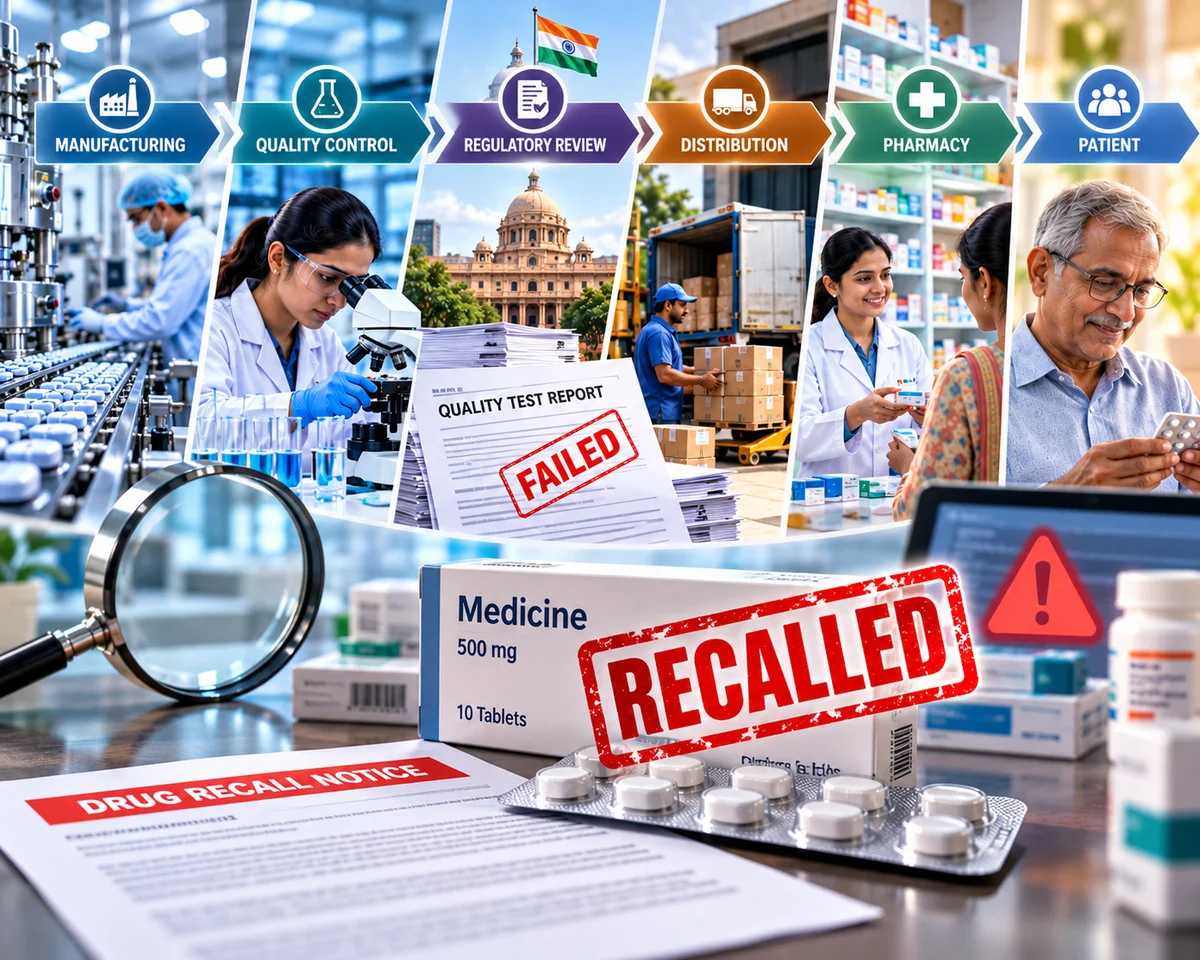
What Happens When a Drug Fails Quality Standards?
Drug regulators can collect samples from the market and send them for testing.
If a product fails applicable standards, regulatory authorities can take action.
Depending on the circumstances, this can include:
Investigation
Product recall
Seizure
Suspension or cancellation of licences
Prosecution
Other enforcement action
CDSCO issued revised regulatory guidelines for sampling of drugs, cosmetics and medical devices by Central and State drug authorities in May 2026.
This demonstrates an important point: regulation does not stop once a medicine leaves the manufacturing plant.
Post-market surveillance remains critical.
What About New Drugs?
A completely new medicine cannot simply be manufactured and sold because a company has developed it.
New drugs are subject to specific regulatory requirements.
The New Drugs and Clinical Trials Rules, 2019 (NDCTR) provide the framework for new drugs and clinical trials. CDSCO continues to maintain the regulatory framework and guidance for these applications.
Depending on the product and circumstances, developers may need to provide extensive information relating to:
Quality
Safety
Efficacy
Clinical studies
Manufacturing
Stability
Risk-benefit assessment
This is why bringing an innovative medicine from the laboratory to the pharmacy can take years.
Pharmacovigilance: Regulation After Approval
Drug regulation does not end when a medicine receives marketing approval.
Once a medicine is being used by large numbers of patients, previously unidentified safety issues may emerge.
This is where pharmacovigilance becomes important.
It involves monitoring adverse drug reactions and other safety information.
CDSCO coordinates India's pharmacovigilance programme with the Indian Pharmacopoeia Commission and adverse-drug-reaction monitoring centres.
The basic principle is:
Approval is not the end of drug safety monitoring.
It is the beginning of continuous real-world surveillance.
2026: India's Drug-Regulatory Framework Is Evolving
Drug regulation is not static.
Several significant regulatory developments have appeared during 2026.
For example, CDSCO has issued notifications involving Schedule H2, prohibited certain fixed-dose combinations, issued requirements relating to pharmacovigilance systems and published revised guidance on drug sampling.
There have also been developments concerning the Drugs and Cosmetics (Compounding of Offences) Rules, 2025, with CDSCO publishing FAQs and guidelines in 2026.
Importantly, some 2026 announcements are draft notifications rather than final rules. For example, CDSCO has published draft proposals concerning additional Schedule H1 drugs, shelf-life rationalisation and other regulatory matters.
This distinction matters.
A draft notification is not the same as a final regulation.
Pharma professionals should always verify the current status before changing business practices.
Why Drug Regulations Matter to Pharmacists
For a pharmacist, regulatory knowledge is not just about passing an examination.
It directly affects everyday decisions.
A pharmacist may need to know:
Whether a medicine requires a prescription
Whether additional records are required
How certain products must be stored
Whether a product is legally permitted for sale
Whether the supplier is authorised
What documentation should be maintained
What to do when a product is recalled
How to respond to an inspection
In other words, pharmaceutical knowledge and regulatory knowledge go hand in hand.
The Future of Drug Regulation
The pharmaceutical industry is becoming more complex.
New drugs, biosimilars, advanced therapies, medical devices, digital systems and AI-assisted technologies are creating new regulatory challenges.
Regulators increasingly need to balance two objectives:
Encourage innovation — while protecting patients.
India's regulatory framework is therefore likely to continue evolving.
For pharmaceutical companies and pharmacies, this means regulatory compliance cannot be treated as a one-time exercise.
It has to become an ongoing process.
PharmaNation Takeaway
Drug regulation may appear complicated because it involves multiple laws, schedules, authorities and procedures.
But the underlying objective is simple:
The right medicine, of the required quality, should reach the patient through a legal and controlled supply chain.
For a pharmacy, compliance begins with the licence but does not end there.
For a manufacturer, approval does not eliminate the need for continuous quality control.
And for a patient, a medicine being available on a pharmacy shelf does not automatically mean that it is appropriate to use without professional advice.
As India's pharmaceutical industry expands and new therapies emerge, understanding drug regulations will become increasingly important—not only for regulators and pharmaceutical companies, but also for pharmacists, distributors, retailers and healthcare professionals.
The editors of this publication. Replace with your real editors in News Desk → Authors.
More from this section
Drug Recall in India: What Happens When a Medicine Fails a Quality Test?
The Practical Antibiotic Handbook by PharmaNation ( DOWNLOAD E-BOOK )

Smart Drug Delivery: The Next Big Innovation in Pharma