Indian Pharma Stocks: Who Benefits From Latest US Tariff Relief?
US tariff relief for selected specialty drugs gives some Indian pharma companies an advantage. Here's what it means for Sun Pharma, Gland Pharma, Piramal Pharma and others.
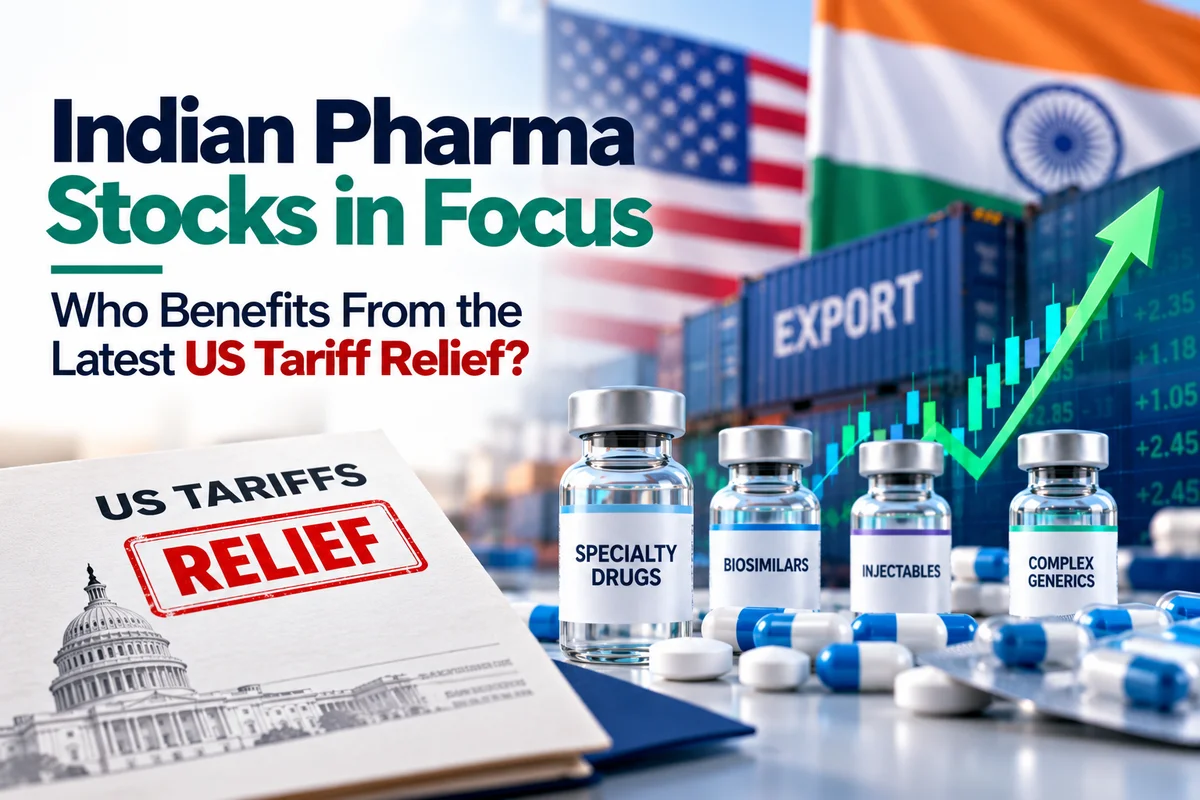
Indian Pharma Stocks in Focus: Who Benefits From the Latest US Tariff Relief?
PharmaNation | Pharma Business & Markets | October 2026
The US pharmaceutical tariff story has taken an unexpected turn for Indian drugmakers.
After months of uncertainty over potential tariffs on pharmaceutical imports, the United States has announced zero-tariff treatment for certain specialty pharmaceutical products and their associated ingredients from India and 19 other jurisdictions.
The development has provided some relief to Indian pharmaceutical companies with significant exposure to specialty medicines, complex therapies and contract manufacturing.
But there is an important catch.
Not every Indian pharma company benefits equally.
While companies with specialty-drug exposure could gain from the exemption, manufacturers that depend heavily on conventional generic medicines still face uncertainty over the future of US tariffs on generic drug imports.
For investors, the distinction is becoming increasingly important.
What Has the US Announced?
The latest US policy provides tariff relief for defined categories of specialty pharmaceutical products and related ingredients imported from eligible jurisdictions, including India.
The eligible categories include certain medicines and therapies associated with areas such as rare diseases, gene and cell therapies, infertility treatments, antibody-drug conjugates and other specialised products.
The move provides a degree of relief to Indian pharmaceutical companies that have invested heavily in higher-value products.
However, it does not eliminate the broader tariff risk facing Indian pharma exports.
Generic medicines remain a separate issue, with the US having announced a future phased tariff framework for imported generic medicines. Reports indicate that the proposed duties would begin at 100% in August 2028 and rise to 200% in August 2029.
That gives Indian pharmaceutical companies time to adjust—but also puts pressure on them to rethink their long-term US strategy.
Why Is This Important for Indian Pharma?
The United States is India's most important pharmaceutical export market.
India exported approximately $9.47 billion of pharmaceuticals to the US in FY26, representing more than 30% of India's total pharmaceutical exports.
That makes changes in US trade policy extremely important for Indian pharmaceutical companies.
However, the latest development also highlights something bigger:
The Indian pharma industry is becoming increasingly diversified.
Companies are moving beyond traditional low-cost generics into:
Specialty medicines
Complex generics
Biosimilars
Injectables
Contract manufacturing
Drug-development services
Advanced biologics
High-value therapies
This shift could determine which companies are best positioned for the next phase of global pharma competition.
Which Indian Pharma Companies Could Benefit?
Sun Pharmaceutical Industries
Sun Pharma is among the companies most closely watched after the specialty-drug tariff exemption.
The company has built a substantial specialty pharmaceutical business in the US, alongside its large generic portfolio.
The latest tariff relief is therefore particularly relevant because specialty products can represent a higher-value segment of the company's US business.
According to recent market analysis, Sun Pharma has more than $1.1 billion in patented US medicines that could benefit from the tariff exemption.
For Sun Pharma, the development reinforces the strategic importance of its move beyond conventional generics.
Gland Pharma
Gland Pharma has significant exposure to complex injectable medicines in the US.
Its business model is different from a traditional tablet-focused generic manufacturer, giving it exposure to products where manufacturing complexity can create stronger competitive barriers.
Recent analysis highlighted Gland Pharma's US injectable business as one of the areas that could benefit from the tariff relief.
Piramal Pharma
Piramal Pharma is another company with exposure to specialised pharmaceutical manufacturing and contract development and manufacturing.
Its CDMO business could benefit indirectly if the latest tariff clarity encourages US pharmaceutical companies to maintain or expand outsourcing relationships with Indian manufacturing partners.
The company also has exposure to specialised therapies and complex pharmaceutical products.
Syngene International
Syngene represents a different side of the pharmaceutical opportunity.
Rather than being primarily a branded drug manufacturer, it operates in contract research and development and manufacturing services.
The company's work with global pharmaceutical and biotechnology companies means that changes in US trade policy can affect it indirectly through client investment and supply-chain decisions.
Its planned capabilities in advanced therapies, including antibody-drug conjugates, could become increasingly relevant as the industry moves toward more specialised medicines.
Divi's Laboratories
Divi's Laboratories is another company worth watching because of its role in pharmaceutical ingredients and custom synthesis.
Its exposure is different from that of a finished-dose generic manufacturer.
If global pharmaceutical companies continue diversifying supply chains and seeking reliable manufacturing partners, companies with strong capabilities in APIs and custom synthesis could potentially benefit.
Recent market analysis has suggested that the latest US tariff developments reduce some uncertainty around custom-synthesis business.
Aurobindo Pharma and Zydus Lifesciences
Aurobindo Pharma and Zydus Lifesciences have significant exposure to the US pharmaceutical market through generics and specialty products.
Their opportunity—and risk—is therefore more mixed.
On one hand, specialty and complex products can benefit from the latest exemption.
On the other, companies with substantial conventional generic exposure remain sensitive to the longer-term US tariff framework.
This makes product mix increasingly important.
The Bigger Question: What Happens to Generic Drugs?
This is where investors need to be careful.
The latest specialty-drug exemption should not be interpreted as a blanket exemption for Indian pharmaceutical exports.
The proposed future tariff regime for generic medicines remains an important risk factor.
Indian companies currently supply a substantial share of generic medicines used in the US.
If very high tariffs eventually apply to imported generics, manufacturers will have several choices:
Increase US manufacturing → Shift production → Absorb some costs → Increase prices → Develop higher-value products → Diversify into other markets
None of these options is simple.
Could Indian Companies Manufacture More in the US?
Some large pharmaceutical companies already operate manufacturing facilities or subsidiaries in the United States.
Local manufacturing can reduce exposure to import tariffs.
But shifting production entirely to the US would be expensive and could undermine the cost advantage that has historically made Indian generics competitive.
The pharmaceutical supply chain is also highly complex.
Manufacturing APIs, intermediates, formulations and finished medicines involves multiple stages, and moving only one stage of production may not completely eliminate tariff exposure.
This is one reason the industry is watching the evolving US policy closely.
What Does This Mean for Pharma Stocks?
The market reaction has already provided an indication of how investors are thinking about the issue.
Indian pharmaceutical stocks gained after the specialty-drug exemption was announced, while the broader market was weaker. The Nifty Pharma index rose more than 1% intraday on September 29 following the announcement.
But investors should distinguish between short-term sentiment and long-term earnings impact.
A tariff exemption may be positive, but its effect on an individual company's earnings depends on:
US revenue exposure
Product mix
Specialty-drug contribution
Generic-drug exposure
Manufacturing location
US pricing
Pipeline
CDMO exposure
Regulatory status
Ability to pass costs to customers
Therefore, simply assuming that every pharma stock will benefit from the latest announcement would be misleading.
A New Divide in Indian Pharma
The latest US developments may accelerate an important divide within the Indian pharmaceutical industry.
Traditional Generic Players
These companies could face greater long-term pressure if the proposed US generic tariffs are implemented.
Specialty Pharma Players
Companies with higher-value specialty medicines may have greater protection under the latest exemption framework.
CDMO/CRDMO Companies
These businesses could benefit from global pharmaceutical companies looking for reliable development and manufacturing partners.
Complex Manufacturing Companies
Businesses involved in injectables, APIs, biologics and other technically demanding products may have stronger competitive advantages.
This could encourage more Indian pharmaceutical companies to move up the value chain.
The Bigger Opportunity for India
There is an important positive angle hidden within the tariff debate.
For years, India's pharmaceutical strength has been associated primarily with low-cost generic manufacturing.
But the current environment is forcing companies to think differently.
The future growth story could increasingly involve:
Specialty medicines + Complex generics + Biosimilars + CDMO + CRDMO + Biologics + Advanced manufacturing
That is consistent with the broader transformation taking place across India's pharmaceutical sector.
Instead of competing only on price, Indian companies increasingly need to compete on technology, quality, speed, intellectual property and manufacturing expertise.
PharmaNation View
The latest US tariff exemption is undoubtedly positive for parts of India's pharmaceutical industry.
But it is not the end of the tariff story.
For investors, the most important takeaway may be that product mix matters more than ever.
A pharmaceutical company with a large specialty portfolio, complex manufacturing capabilities or strong CDMO operations could be positioned very differently from a company dependent primarily on commodity generics.
The next few years could therefore accelerate the transformation of Indian pharma from a generic-volume story into a diversified, higher-value global pharmaceutical industry.
The Bottom Line
The US has given Indian pharma companies some breathing room on selected specialty medicines.
But the larger tariff question remains unresolved.
For Indian pharmaceutical companies, the strategic response is becoming increasingly clear:
Diversify.
Innovate.
Move up the value chain.
Reduce dependence on commodity generics.
For investors, meanwhile, the important question is no longer simply:
“How much does this company sell in the US?”
It is:
“What exactly does the company sell in the US—and how difficult would it be to replace?”
That distinction could determine which Indian pharma companies emerge stronger from the next phase of global pharmaceutical competition.
Disclaimer: This article is for informational and educational purposes only and is not investment advice. Pharmaceutical stocks can be volatile, and investors should conduct independent research before making investment decisions.
PharmaNation will continue tracking US pharma policy, Indian pharmaceutical companies, export trends and developments affecting the sector.
The editors of this publication. Replace with your real editors in News Desk → Authors.
More from this section

The Practical Antibiotic Handbook by PharmaNation ( DOWNLOAD E-BOOK )
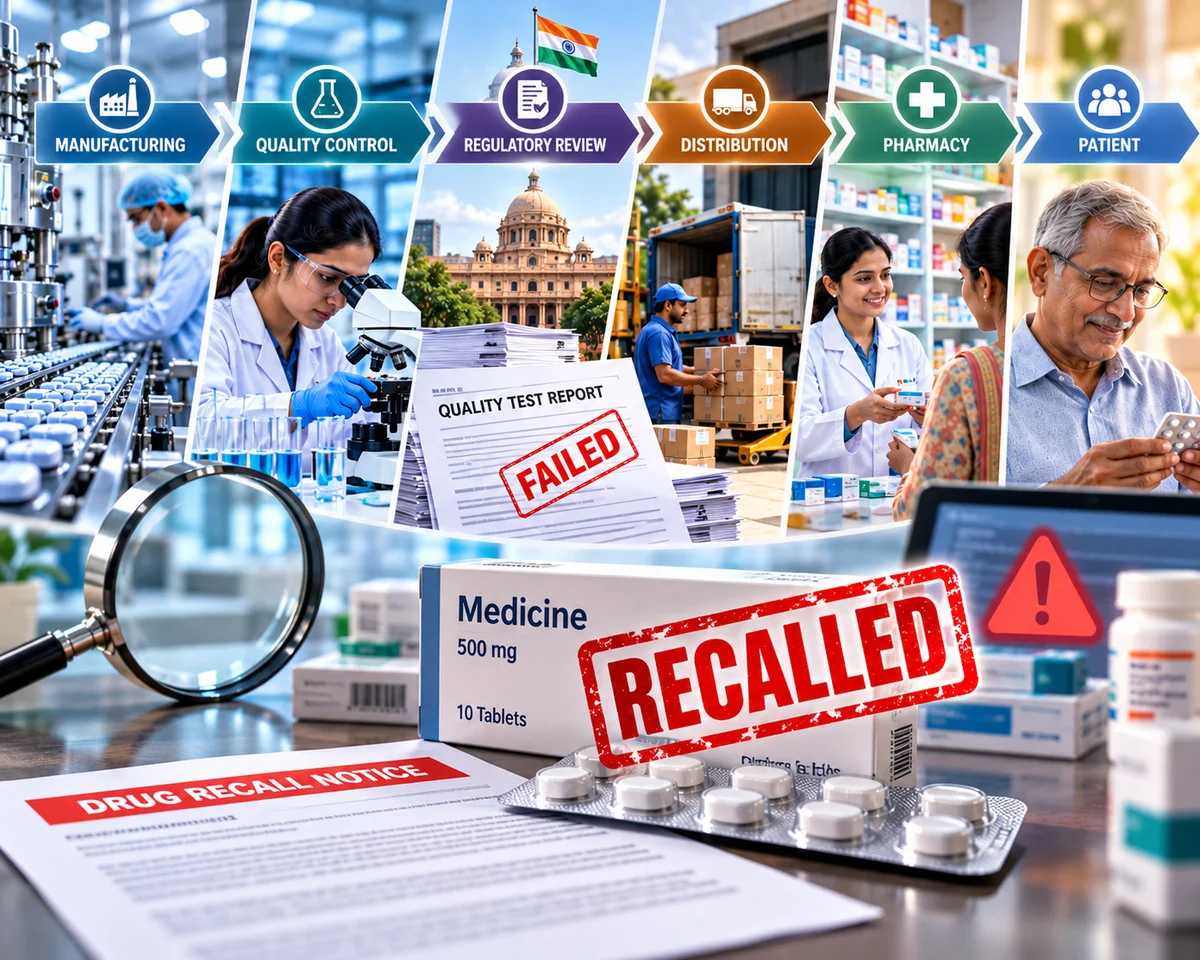
Drug Recall in India: What Happens When a Medicine Fails a Quality Test?

Drug Regulations in India: Rules, CDSCO, Schedules & Pharmacy Compliance