Maharashtra FDA Cancels Cipla Pune Warehouse Drug Licences: What Happened?
Maharashtra FDA cancels Cipla Pharma & Life Sciences' Pune C&F warehouse drug licences after fresh proceedings over Reactin Plus, storage and record-keeping issues.

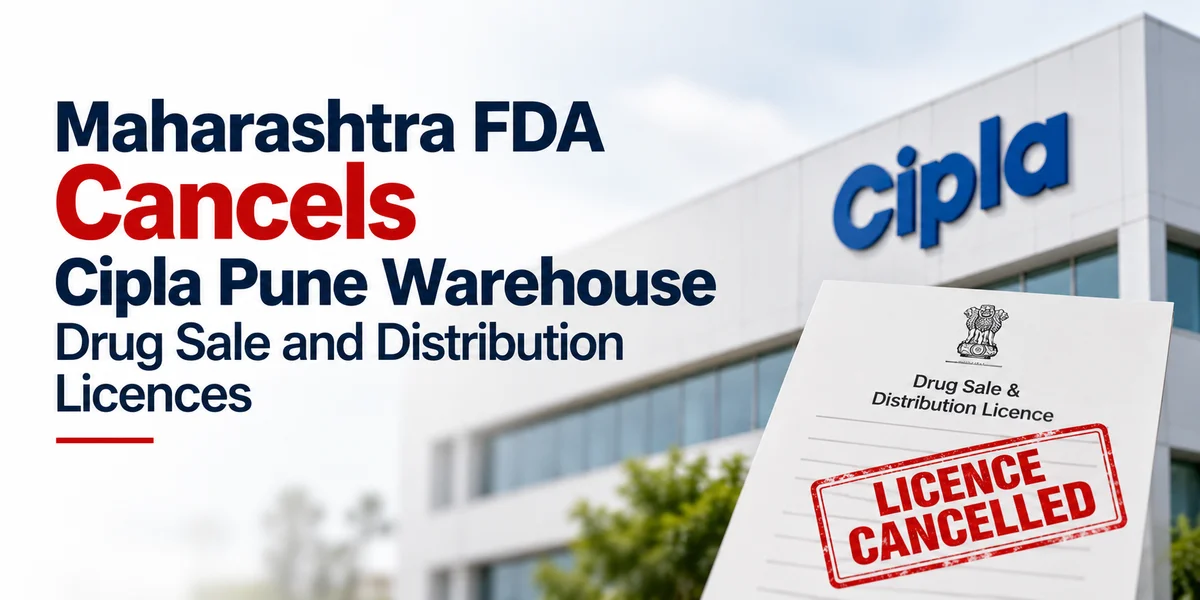
The Maharashtra Food and Drug Administration (FDA) has cancelled the drug sale and distribution licences of Cipla Pharma & Life Sciences Ltd's carrying and forwarding (C&F) warehouse at Wadki in Pune, citing alleged regulatory and operational irregularities.
The latest order was issued on October 1, 2026, following fresh proceedings conducted in compliance with directions from the Bombay High Court.
The development puts the spotlight once again on pharmaceutical distribution, storage practices, documentation and compliance requirements across India's medicine supply chain.
What Led to the FDA Action?
The case relates primarily to findings concerning Reactin Plus Tablets, a Schedule H prescription medicine.
During inspections, Maharashtra FDA officials reportedly raised concerns about the information and claims appearing on the product's packaging. The regulator alleged that the packaging described the medicine in terms including “Analgesic & Anti-inflammatory” and contained claims relating to relief from several types of pain.
The FDA considered these claims and associated imagery to be inconsistent with provisions of the Drugs and Cosmetics Act, 1940 and the applicable rules.
The regulator had also reportedly seized Reactin Plus stock valued at approximately ₹11.19 lakh during its earlier inspection.
Storage and Record-Keeping Issues Also Flagged
The FDA's concerns were not limited to product packaging.
According to reports on the inspection findings, officials identified several issues at the warehouse, including:
Medicines allegedly stored directly on the floor
Inadequate storage arrangements and concerns relating to pallets or racks
Cleanliness and dust-related observations
Lack of a clearly identified area for expired medicines
Inadequate records and procedures relating to disposal of expired stock
Differences between computerised inventory records and physical stock
Deficiencies in purchase and sales documentation
Issues relating to inspection and recall records
These findings underline the importance of maintaining appropriate Good Distribution Practices (GDP) and robust documentation throughout the pharmaceutical supply chain.
Why Was There a Fresh FDA Proceeding?
The current order follows an earlier regulatory action against the same facility.
The FDA had previously cancelled the licences with effect from August 27, 2026. However, following proceedings before the Bombay High Court, the earlier process was withdrawn and the regulator was directed to undertake fresh proceedings.
The FDA subsequently issued a revised show-cause notice to Cipla on September 4. Cipla submitted its written response on September 11, followed by a personal hearing on September 21.
After considering the company's response, inspection findings, records and applicable legal provisions, the licensing authority issued the fresh cancellation order on October 1.
Cipla Responds
Cipla has described the FDA's decision as disappointing.
The company has maintained its commitment to quality and patient safety and said it believes its Pune C&F warehouse operates in compliance with applicable distribution, storage and digital record-keeping protocols.
Cipla is reviewing the order and evaluating further options.
It is important to note that the regulatory action concerns the drug sale and distribution licences of the specific Wadki C&F facility. It should not be interpreted as cancellation of Cipla's overall pharmaceutical business or manufacturing licences.
What Does This Mean for the Pharma Distribution Sector?
The case is significant beyond Cipla because it highlights the regulatory responsibilities of the entire pharmaceutical distribution chain.
Pharmaceutical compliance does not end at the manufacturing facility. Once medicines enter the distribution network, companies and distributors must continue to maintain appropriate standards for:
Storage → Inventory → Documentation → Recall → Expiry Management → Distribution
Even established pharmaceutical companies can face regulatory action when authorities identify alleged deficiencies in these areas.
For wholesalers, distributors, carrying-and-forwarding agents and pharmacies, the case serves as a reminder to regularly review their compliance systems.
A Wake-Up Call for Pharma Distributors
For India's pharmaceutical distribution sector, the Cipla Pune case reinforces several practical lessons.
1. Storage conditions matter
Medicines must be stored appropriately and protected from contamination, damage and unsuitable environmental conditions.
2. Expired medicines need proper segregation
Expired or damaged products should be clearly segregated and handled according to applicable procedures.
3. Inventory records must match physical stock
Differences between computerised records and actual inventory can raise serious compliance concerns.
4. Product labelling requires careful attention
Claims, descriptions and promotional statements appearing on medicine packaging need to comply with applicable laws and regulatory requirements.
5. Documentation is critical
Purchase, sale, recall, inspection and disposal records form an important part of pharmaceutical compliance.
PharmaNation Takeaway
The Maharashtra FDA's latest action against Cipla's Wadki facility is another reminder that pharmaceutical compliance extends across the entire medicine supply chain.
For the industry, the key message is clear: maintaining quality and regulatory compliance requires continuous attention—not just at the manufacturing stage, but also during storage, distribution, inventory management and product recall.
As regulatory scrutiny of India's pharmaceutical supply chain continues to evolve, distributors and pharmacies will need increasingly robust systems to manage documentation, inventory and compliance.
PharmaNation will continue tracking major regulatory developments affecting pharmaceutical companies, distributors, wholesalers and pharmacies across India.
Disclaimer: This report is based on publicly reported information regarding the Maharashtra FDA's proceedings and the company's response. Regulatory proceedings may be subject to further legal or administrative developments. Readers should refer to the relevant regulatory orders and official documents for definitive legal information.
The editors of this publication. Replace with your real editors in News Desk → Authors.
More from this section

The Practical Antibiotic Handbook by PharmaNation ( DOWNLOAD E-BOOK )
Drug Recall in India: What Happens When a Medicine Fails a Quality Test?

Drug Regulations in India: Rules, CDSCO, Schedules & Pharmacy Compliance